
Introduction
Pediatric dentistry under general anesthesia is sometimes needed for children who need dental care but cannot tolerate treatment while awake. Many parents wonder about children’s dental procedures with anesthesia, safe dental care for kids, and what parents should know about anesthesia in pediatric dentistry. In this blog, you will learn when general anesthesia is used, how it works, and how to prepare your child for a safe dental experience.
What Is Pediatric Dentistry Under General Anesthesia?
Pediatric dentistry under general anesthesia means a child is put into a deep sleep for dental treatment. During this time, your child will not feel pain or remember the procedure. Dentists use this method for children who are very young, have special needs, or need many dental treatments at once. As a result, the dental team can work safely and quickly.
When Is General Anesthesia Needed in Children’s Dental Care?
Not every child needs general anesthesia for dental work. However, there are times when it is the best choice. For example, dentists may suggest it if:
In some areas, access to pediatric dental specialists may affect your options. Always ask your local dentist about the best care for your child.
How Is General Anesthesia Administered for Dental Procedures?
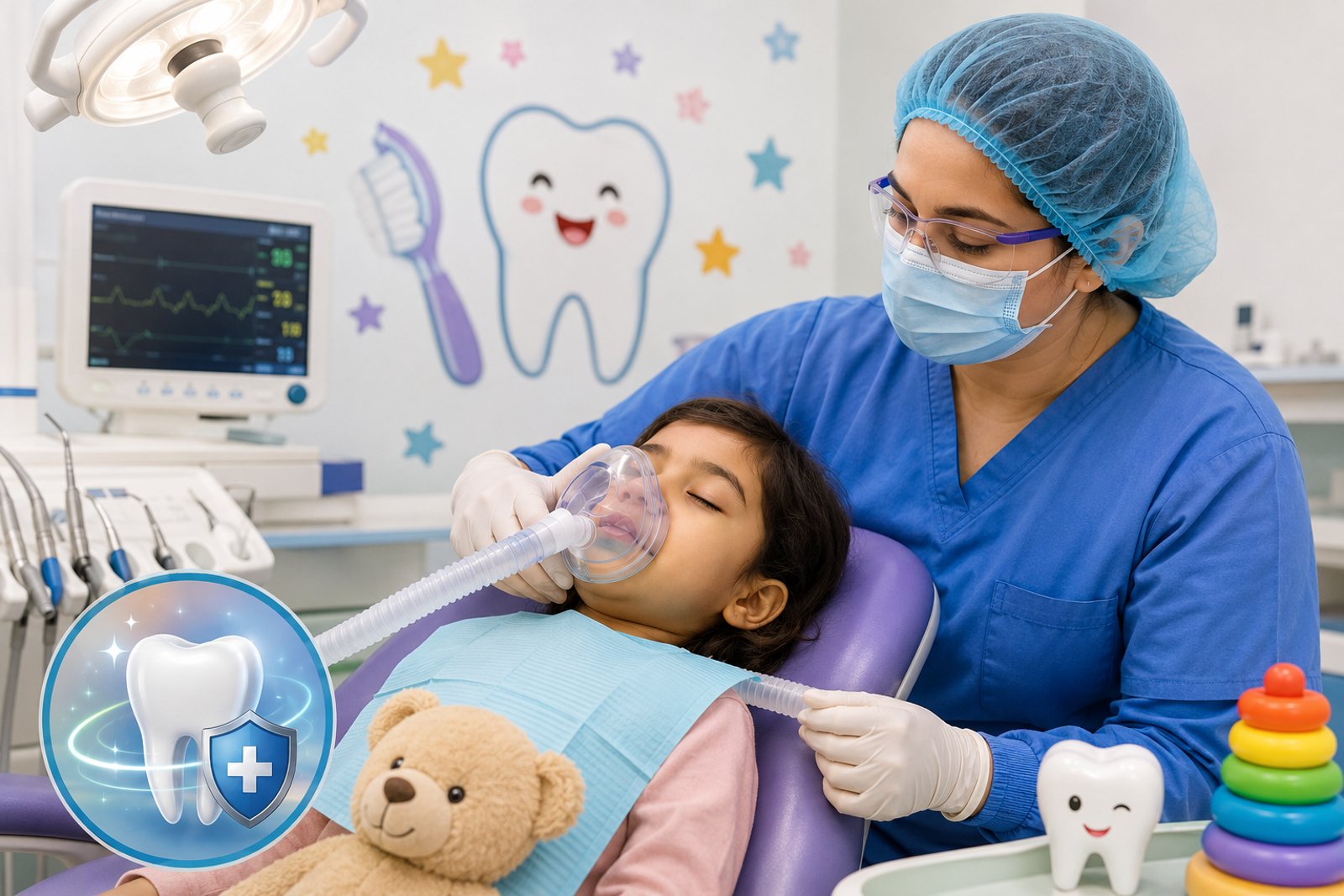
First, a trained doctor called an anesthesiologist gives the medicine. Usually, your child breathes in the medicine through a mask or gets it through a small tube in the arm. Soon after, your child falls asleep. While your child is asleep, the dental team watches their breathing, heart rate, and blood pressure. After the dental work is done, the medicine is stopped, and your child wakes up in a safe recovery area.
Benefits: What Parents Should Know
General anesthesia can make dental care easier and less stressful for children. Still, it is important to know both the benefits and risks. For instance, benefits include:
Preparing Your Child for Dental Treatment Under General Anesthesia
Good preparation helps your child feel safe and ready. Before the procedure, your dental team will give you clear instructions. For example, you may need to:
Additionally, talk to your child in simple words about what will happen. Let them know you will be nearby the whole time.
Aftercare and Recovery: Tips for Parents
After the procedure, your child may feel sleepy or confused. But most children recover quickly. To help your child at home, follow these tips:
Usually, children return to normal activities within a day. However, always follow your dentist’s aftercare instructions closely.
Frequently Asked Questions
Conclusion
Some children may require dental treatment under general anesthesia to ensure comfort, safety, and effective care during complex procedures. A thorough evaluation helps determine the most suitable approach based on the child’s dental needs. With expert pediatric dental care, children can have a positive and stress-free treatment experience.
Give your child safe and specialised dental care with expert guidance from Sky Dental Lounge.